Mostrando entradas con la etiqueta África. Mostrar todas las entradas

domingo, 10 de septiembre de 2017

Las que se atrevieron

Lo diferente asusta. Todos queremos encajar, ser como los demás, no llamar demasiado la atención. Nos da miedo destacar. Tememos al qué dirán. Sin embargo, hay unos pocos valientes que se atreven a desafiar esta sociedad tan homogénea, proclamando a los cuatro vientos que la diversidad es riqueza y merece ser celebrada. Y amada.

Las que se atrevieron es el homenaje de Lucía Asué Mbomío Rubio a su madre, una mujer española blanca que se casó con un hombre ecuatoguineano negro todavía cuando el franquismo estaba muy vivo en España. Pero no solo a ella, sino a todas esas valientes que se negaron a conformarse con lo que se esperaba de ellas y decidieron apostar por el amor, sin distinguir nacionalidad ni color de piel.

En este pequeño libro, Lucía entrevista a seis mujeres con ese rasgo en común, con el fin de dar voz a esta realidad que es desconocida en España. Todavía no se acepta que personas negras puedan haber nacido aquí. Se sigue asumiendo que para ser español tienes que ser blanco. A través de este libro, Lucía demuestra que esa simplificación dejó de ser real hace mucho tiempo.


Esas relaciones de pareja son iguales que cualquier otra: mismos problemas, mismas dificultades. Algunas duran mucho tiempo, otras se quedan por el camino. Lo que todas defienden es el hecho de que el color de piel no fue crucial en el desenlace. ¿Acaso por casarse con alguien blanco el éxito del matrimonio está asegurado?

Todas estas mujeres se encontraron también con incomprensión y sorpresa por parte de su familia y su círculo más cercano. Es cierto que ya han pasado varias décadas, pero… ¿hemos cambiado tanto? Ojalá me equivoque, pero creo que todavía en España sorprende ver a una pareja con diferente color de piel. Puede que en las ciudades grandes no choque tanto, pero desde luego en los pueblos todavía sigue convirtiéndose en la comidilla de turno.

Por eso este libro es necesario. Para rendir homenaje a esas valientes. Para visibilizar esta realidad de la sociedad española. Para reflexionar sobre la identidad unívoca y las identidades líquidas.

Para ver que el amor no entiende de culturas, nacionalidades o tonos de piel.


domingo, 20 de agosto de 2017

Océano África

África.

¿Qué es África? ¿Qué sabemos de África? Nada o menos. Al menos de forma general. O lo asumimos como un todo. De ahí que sea todavía necesario repetir que África no es un país. Algo tan obvio, pero tantas veces percibido así.

África.

Decía Ryszard Kapucinsky que “este continente es demasiado grande para describirlo. Es todo un océano, un planeta aparte, todo un cosmos heterogéneo y de una riqueza extraordinaria. Solo por una convención reduccionista, por comodidad, decimos “África”. En la realidad, salvo por el nombre geográfico, África no existe”.

Y es cierto. África es un continente inmenso: 55 países, más de mil millones de personas, multitud de etnias y culturas. África es diversidad y vida.

África.

Un océano. Esto es África para Kapucinsky. Y para Xavier Aldekoa. Este periodista catalán; después de pasar más de diez años recorriendo el continente vecino decidió recoger sus vivencias en un libro que no podría llamarse de otra forma: Océano África.


Mali, República Democrática del Congo, Sudáfrica, Angola, Camerún, República Centroafricana, Botsuana, Togo, Kenia, Somalia, Nigeria, Sudán del Sur, Mozambique, Yibuti, Sudán. Aldekoa se sumerge en todos estos países africanos para ver, escuchar y contar cuál es esa realidad. En RDC, en un momento, dice:

“A menudo me preguntan por qué viajo a África (…). Yo viajo a África para explicar que una niña congolesa se ata bolsas de plástico en los pies porque no tiene zapatos. Para intentar entender que en el Congo la gente no mata por salvajismo, mata por interés. Por el poder. Como en cualquier parte del mundo. Y para contar también que hay gente que no mata. Personas anónimas que, cuando todo se hunde a su alrededor, deciden proteger a los suyos, arriesgarse a ayudar al vecino y aceptar que pueden morir en el intento. Personas que solo quieren vivir sus vidas y que les dejen en paz. Personas que, cuando el mundo se va al infierno, eligen tener el valor de ser seres humanos. Hay millones de personas así en África”.

Porque en África, al igual que en todas partes, hay personas buenas y malas; hay paz y hay guerra; hay hambre, desesperación; pero también hay ilusión y felicidad. Como dice Boubacar Boris Diop, intelectual senegalés: “En África, como en el resto del planeta, encontramos lo mejor y lo peor. Hay que ser idiota para afirmar que nuestro mundo es un remanso de paz y que solo África perturba esta armonía universal”.

Por eso hay que leer a Aldekoa. Para conocer ese océano que es África, con su lado más dulce y con lo más amargo. Y, sobre todo, para aprender. A mí, personalmente, me ha abierto nuevos horizontes. No sabía nada sobre los pigmeos en Camerún; el petróleo en Angola; en qué consiste la Lobola; los bosquimanos o san en Botsuana; la contaminación por culpa del crudo en Nigeria; o cómo China se está abriendo paso en este continente. Un desconocimiento total.

Es cierto que África, en mi caso, comenzó a ser una realidad más cercana este julio y, para mí, África es cada uno de los chicos cameruneses, malienses y guineanos que conocí en julio en Ceuta. Pero sé que ellos son la punta del iceberg de un continente inmenso, lleno de vida y diversidad, que merece ser conocido. Y leer a Aldekoa es un primer paso para ello.


“Para querer a África no basta con soñarla, hay que caminar sus calles, reírse con su gente, escuchar sus alegrías o tristezas, sentirse ridículo por no entender nada y volver a sorprenderse para comprender. Cualquiera que ansíe conocer un territorio tan vasto y diverso debe recorrerlo con los ojos abiertos y cerrarlos para volver a empezar”.


viernes, 26 de agosto de 2016

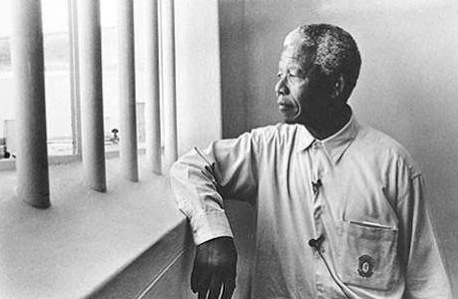
A Long Walk to Freedom: Nelson Mandela

"I had no epiphany, no singular revelation, no moment of truth, but a steady accumulation of a thousand slights, a thousand indignities and a thousand unremembered moments produced in me an anger, a rebelliousness, a desire to fight the system that imprisoned my people. There was no particular day on which I said, Henceforth I will devote myself to the liberation of my people; instead, I simply found myself doing so, and could not do otherwise".

These are the words of Nelson Mandela, one of the most renowned leaders of the 20th century. His wholehearted commitment to the liberation struggle transformed not only the course of South Africa, but also the world's. However, his path was never easy or even. He had to fight restlessly, jeopardizing his life and the lives of his beloved ones. 


He had to become an outlaw, spending a lot of years in the shadows. Mandela spent half of his life working for an organization considered illegal; fighting for a cause which was thought to be inmoral and unrealistic. Nonetheless, even in his darkest moments, he had faith and did not falter. 

The Nobel Prize winner was imprisoned for almost three decades. It is amazing how he never gave up; how he held up in the toughest moments, without hesitation.

"It was during those long and lonely years that my hunger for the freedom of my own people became a hunger for the freedom of all people, white and black. I knew as well as I knew anything that the oppressor must be liberated just as surely as the oppressed. A man who takes away another man's freedom is a prisoner of hatred, he is locked behind the bars of prejudice and narrow-mindedness. I am not truly free if I am taking away someone else's freedom, just as surely as I am not free when my freedom is taken from me. The oppressed and the oppressor alike are robbed of their humanity"


I strongly believe that the key to his success was the fact that he always acted with good faith. Mandela always cared about the others, about the people, even when he had to pay the price himself. The sacrifice he was willing to make was immeasurable. He genuinely served the people of South Africa with all his heart and soul. 

Reading Nelson Mandela's autobiography has shown me many things. First, the fact that we are all human and we thus make mistakes. Even a peace man as he was made missteps. And that is more than fine. Second, the liberation struggle never ends. We have made great achievements in this field, yet we shall not take any of it for granted. We have to keep fighting till every single person from each and every part of the world is free. Finally and above all, it has given me reasons not to lose faith in Humanity. Because in a country where apartheid reigned, some courageous people decided to stand up and fight for justice. And against all odds, they succeeded. In the book, Mandela said "Even in the grimmest times in prison, when my comrades and I were pushed to our limits, I would see a glimmer of humanity in one of the guards, perhaps just for a second, but it was enough to reassure me and keep me going. Man's goodness is a flame that can be hidden but never extinguished".

Just to finish, here there is one of my favorite Mandela's reflection: "I have discovered the secret that after climbing a great hill, one only finds that there are many more hills to climb. I have taken a moment here to rest, to steal a view of the glorious vista that surrounds me, to look back on the distance I have come. But I can rest only for a moment, for with freedom come responsibilities, and I dare not linger, for my long walk is not yet ended". 


In few words, a long book-more than 700 pages- that explains with all details the life and fight of this unique leader. Very interesting, yet maybe a little bit too long. It contains precious reflections of Mandela, a man that will always be remembered.

miércoles, 15 de abril de 2015

Valentine's Day Anthology 2015

El otro día, mientras leía el periódico, encontré un artículo sobre la literatura africana.  En él se contaba la historia de la publicación de Valentine's Day Anthology 2015, donde aparecen recogidas siete historias de amor situadas en África y protagonizadas por personajes del mismo continente. 
Debido a la riqueza y variedad de lenguas de África, se han publicado en el idioma original del autor y en inglés, con el fin de facilitar su difusión.

De todas ellas, mis favoritas han sido Solitaire, Woman in the Orange Dress y Painted Love. Si podéis echarle un vistazo ¡ya sabéis! Aquí os dejo el enlace para descargar el libro completamente gratis.

En pocas palabras: un proyecto ideal para recordar que el amor no tiene fronteras.


A few days ago I came across an article about African literature while reading the newspaper. In this post, there were explained the reasons why Valentine's Day Anthology 2015 had been published. It is a book which gathers up seven love stories set in Africa. They appear both in their original language and English.

After reading them all, my favorite ones are -with no doubt- Solitaire, Woman in the Orange Dress and Painted Love. Give it a go, you will not be disappointed! Here it is the link to download the book - free!

In few words: a great project to remind us all that love has no borders!